
We have taken over AMS desks where every monthly report for two years was green — response times met, resolution times met — while the ticket backlog doubled and the business quietly built spreadsheet workarounds for everything that mattered. The metrics weren't lying. They were measuring the wrong things.
Why classic SLAs go green while service goes bad
Response-and-resolution SLAs measure the desk's speed at processing tickets. They say nothing about whether tickets should exist at all. A desk that closes the same password reset four hundred times a year is hitting its SLA four hundred times. A desk that eliminates the reset is invisible in the report — one fewer row.
Worse, per-ticket metrics create an incentive to close rather than to fix. Reopen rates climb, users learn that "resolved" means "bounced back," and the desk's numbers stay green throughout.
The scorecard that changes behaviour
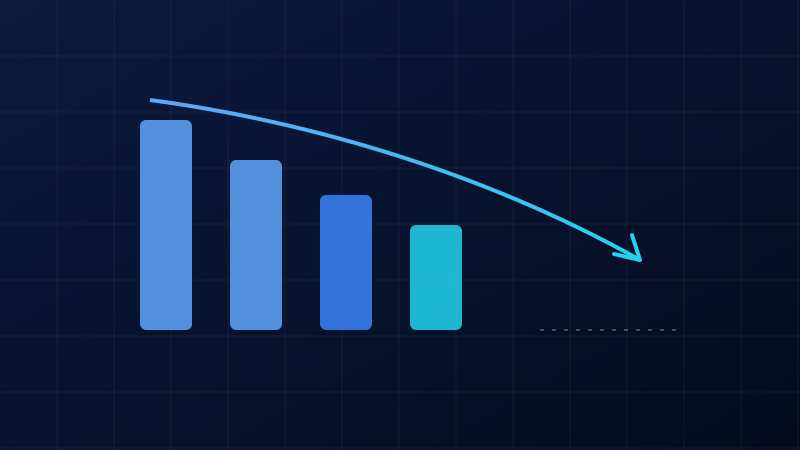
- Backlog trend, not backlog size. Is the open-ticket curve pointing down quarter over quarter? This is the single most honest number an AMS desk produces.
- Repeat-incident rate. What share of this month's tickets are the same problem as last month's? A desk doing real problem management drives this down relentlessly.
- Reopen rate. The lie detector for resolution-time SLAs.
- Business-period performance. Did month-end close without system firefighting? Did year-end? The desk exists for these weeks; measure it on them.
- Ticket elimination. Tickets prevented by root-cause fixes, automation and user enablement — reported with the same prominence as tickets closed.
Pay a desk per ticket closed and you will get many tickets closed. Pay a desk for a shrinking backlog and you'll get a desk that fixes causes.
Where AI genuinely helps a desk
Modern triage — classification, routing, known-error matching, drafted resolutions — reliably absorbs the repetitive majority of L1 volume. On desks we run, roughly seven in ten L1 tickets are triaged without a human touch, with engineers approving anything user-facing. But note what this does to the economics: it frees senior hours for problem management, which is where backlogs actually die. AI on a desk that isn't doing problem management just closes the wrong tickets faster.
If you renegotiate one clause this year
Add a repeat-incident metric with a declining target, and tie a meaningful slice of the vendor's fee to it. It reorients the entire desk from ticket-closing to problem-solving — usually within a quarter.
The goal of an AMS desk is not to run a good queue. It is to make the queue smaller. Contracts should say so.