When the mandate lands — cut IT spend by twenty percent — the fastest levers are always the wrong ones: freeze hiring, squeeze vendor rates, defer upgrades. Eighteen months later the run cost is back, the best people are gone, and the deferred work has become an incident. There is a better sequence.
First: know what the money actually buys
Most IT budgets are organised by cost type — licenses, people, infrastructure — which tells you nothing about value. Re-cut the spend by business capability: what does order-to-cash cost to run? What does the ERP estate cost per user? The exercise takes weeks, not months, and it always surprises. We've seen decommissioned-in-theory applications still consuming six figures, and "cheap" legacy systems whose true cost — support, workarounds, integration duct tape — exceeded their replacement.
The four sustainable levers
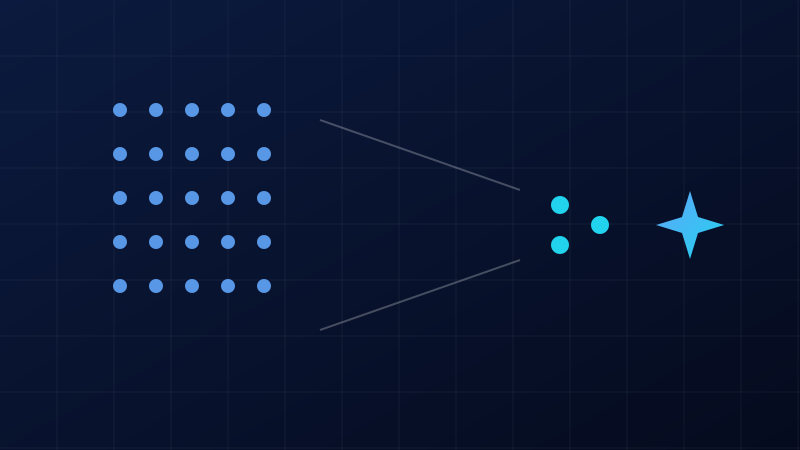
1. Application rationalisation. Every enterprise over twenty years old runs software nobody would buy again. The discipline is a ruthless inventory: what does each application cost, who uses it, what would absorb its function? Retiring ten marginal applications usually funds the entire cost program — and unlike a rate squeeze, retirement savings recur forever.
2. Automation of the run itself. Ticket triage, patching, monitoring responses, access requests, report distribution — the operational middle of IT is dense with work that AI and automation now do reliably. This is where cost programs and capability programs point the same direction: the desk gets cheaper and faster.
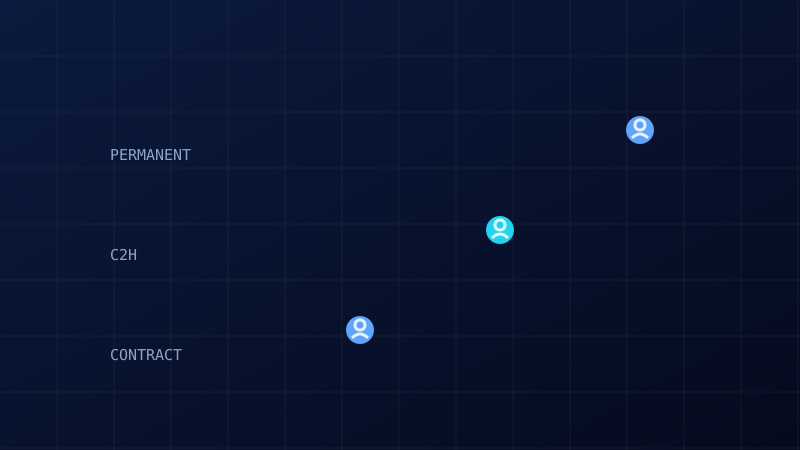
3. Sourcing redesign, not rate squeezing. Beating a vendor down five percent yields five percent, once, with resentment. Restructuring what work happens where — steady-state support to a managed desk in a better cost geography, spiky work to contract rather than permanent — yields multiples of that, durably. The unit of savings is the delivery model, not the rate card.
4. Cloud hygiene with guardrails. Right-sizing, scheduling non-production environments, reserved capacity, and — critically — cost visibility in the deployment pipeline so drift can't silently return. One-off cleanups decay; guardrails compound.
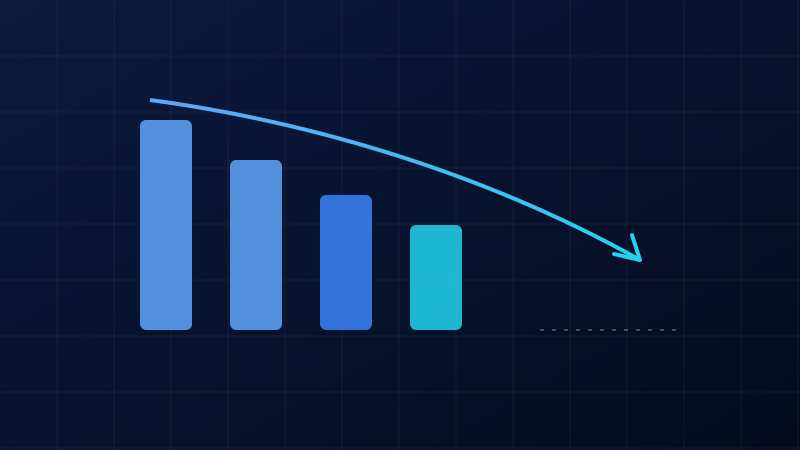
The test for any savings idea: will this line still be lower in year three? Rate squeezes fail the test. Retirements, automation and delivery-model changes pass it.
What not to cut
- The people who know where the bodies are buried. Losing the engineer who understands the integration layer saves a salary and costs an outage.
- Evergreen maintenance. Deferred upgrades are loans at incident-rate interest.
- The improvement backlog. A run organisation with zero improvement capacity can only ever get more expensive.
A realistic shape for year one
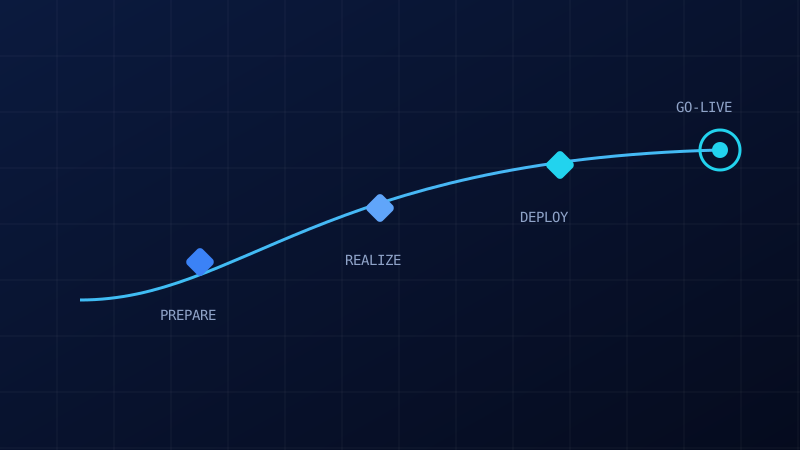
Capability-based cost map in the first quarter; application retirements and automation quick wins by mid-year; sourcing redesign in the second half. Dramatic announcements optional. The savings aren't.